 Ryu Seung Ryong comments on the scale of 'Moving Season 2'
Note: The following material contains themes and details that may not be suitable for readers under the age of 18. Read with caution.
"When you see the villains in the drama, you can't help but think, 'I'd just shoot them in one shot.' But this isn't a drama that justifies personal revenge."
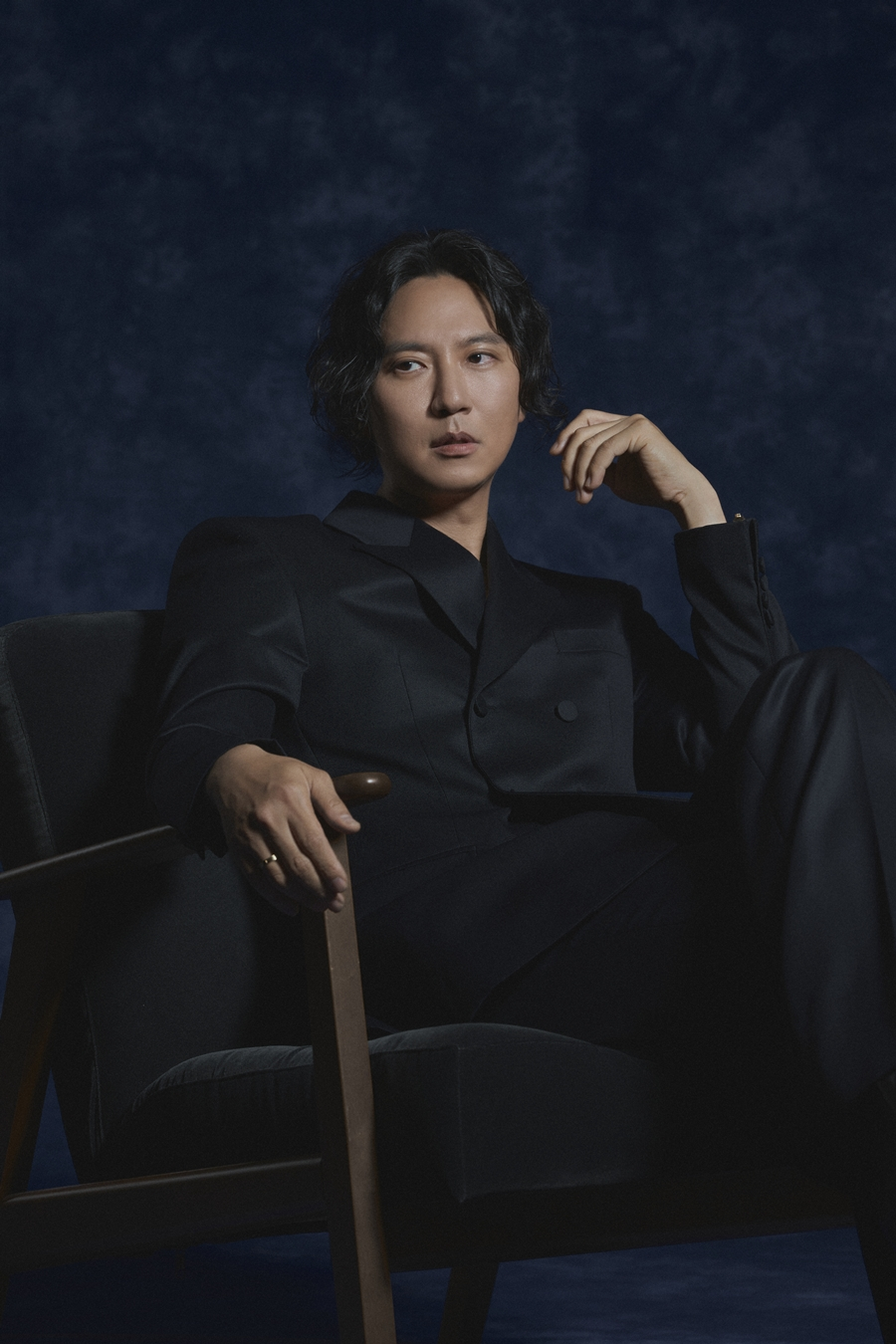
"Action Master" Kim Nam Gil (45) adds another feather in his cap with his action-packed performance as a police constable in Netflix thriller Trigger.
Trigger tells the story of two men — Lee Do (Kim Nam Gil) and Moon Baek (Kim Young Kwang) — who pick up guns for different reasons amidst the continuous occurrence of gun violence happening as a result of illegal firearms deliveries in Korea, a country known to be gun-free.
Kim Nam Gil plays Lee Do, a police constable who once served as a military sniper in high-risk conflict zones.
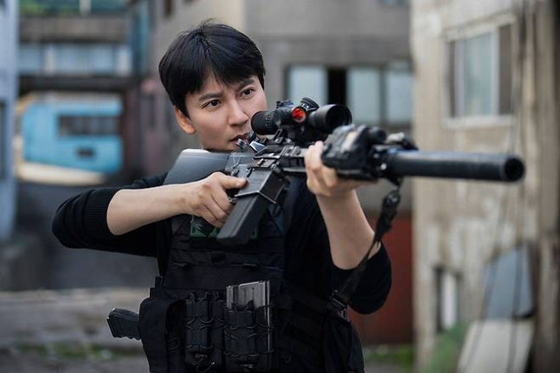
The premise of firearms being delivered in South Korea, a so-called "gun-free country," and a chain of gun-related incidents erupting as a result feels both unfamiliar and chilling in the context of South Korea. Moreover, the recent murder case in Songdo, Incheon — where a father shot and killed his son — has made it impossible to dismiss gun-related incidents as mere products of imagination. The coincidental overlap with reality heightens the tension of the story and lends weight to the message Trigger aims to deliver.
"Guns don't seem to fit with our country, yet in a way, they also do. They feel far removed from daily life, but we are a divided nation, and men who have served in the military all know how to handle firearms. Yet guns are illegal. It's ironic. In that context, if guns were made available, all kinds of conflicts and issues would emerge, and I found the question of how people would react to be novel. I was also curious what the global response would be," Kim said.
"When I was younger, I also used to wonder what it would be like to have a gun, since you come across them so much in games. Because of that, we approached the subject matter and things like the number of bullets and firearms with extra sensitivity. That actually made me more nervous, and the production team put in a lot of effort to ensure viewers wouldn't feel any sense of aversion."
When asked why he used to imagine "what if I had a gun" in the past, Kim Nam Gil explained, "When I was younger, before I was fully grown [and matured] as a person, I thought that if I had a gun, I'd fire even at the slightest emotional [agitation]. It wasn't so much about punishing someone as it was about thinking of the power a gun holds. At that time, I was repressed, supressed, and had so many things I wasn't allowed to do, which made it even harder. I often imagined it as if it were some kind of escape."
He continued, "When I work on a project, my values tend to shift depending on the story or message that the writer and director have crafted. In the past, I thought maybe [guns] could be necessary to protect oneself. Even in the U.S., it all started as a way to protect livestock and property. But then, I found myself agreeing with Lee Do [and wondered] — can peace gained by killing someone hold any meaning? That's why I liked Trigger's ending, which suggested that removing the elements of danger for the generations to come might be the better path."
Talking about concerns about global perception, he said, "When we portrayed tragedies that happen in other countries as if they were happening in Korea, I worried about how people in those places who are actually enduring such pain would feel watching it. I even wondered whether it was appropriate as a message to the countries living through those realities."
He also highlighted what he was careful about regarding the use of firearms as a tool for personal revenge in the drama. "The story is built in a way that almost forces viewers to sympathize with those who use guns. A firearm ends up in the hands of someone who sees themselves as socially disadvantaged or vulnerable, but I didn't want it to come across as saying, 'this is what happens when the vulnerable get guns.' What I really wanted to explore was something more fundamental about human nature, beyond the dynamics of the weak and the strong."
"In real life, so many things go unresolved by law, which is why I think people find revenge stories so cathartic and satisfying. But this story asks, 'Is that really right?' A gun doesn't discriminate between its wielders. Later on, we show that even sex offenders or gangsters can get hold of a gun, and that's where the fear really comes in."
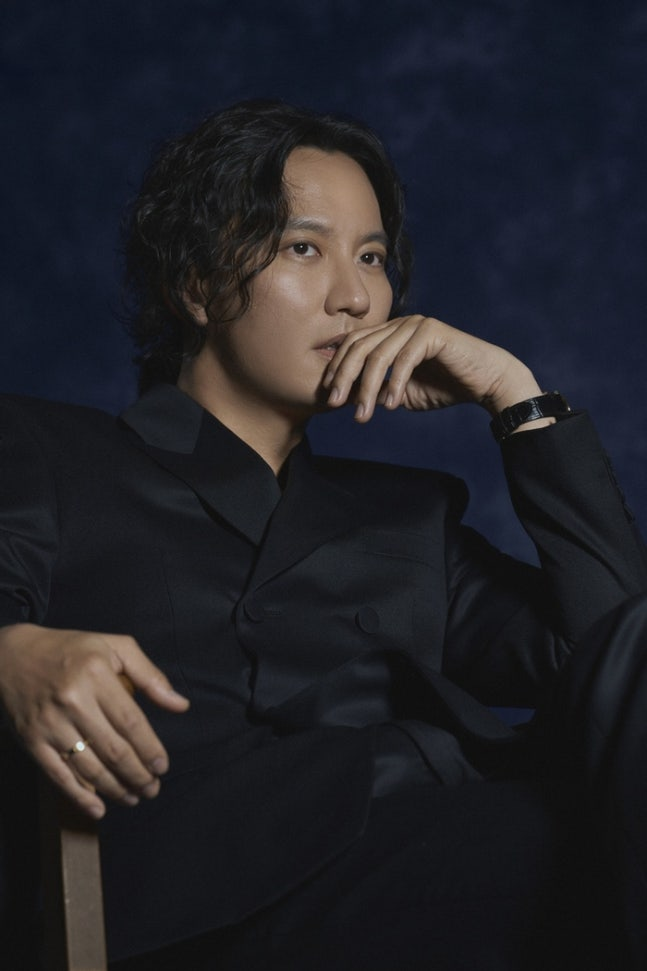
For Kim Nam Gil, the shooting incident that occurred just days before the release of the series was inevitably a cause for concern. He emphasized, "What was shocking was realizing that the story in the work could actually happen in real life. But Trigger is a project that delivers its message not through the guns, but through the stories of the people."
"It shows how each person's anger, thirst, and ideology are expressed when they come across the tool of a gun. But above all, it delivers the message that, for the sake of future generations, we should 'compromise and be considerate of each other', without picking up guns."
Kim also explained why Trigger features restrained action scenes for his character: "When people think of gun action, it's often about punishing villains or using guns as tools for revenge. But Lee Do steps in to restrain and control someone else's trigger, so the action had to be controlled. That's why I used restrained action, and by incorporating bare-handed combat instead of using guns, we wanted to convey the message: this shouldn't be framed as violence."
He added, "Bare-handed combat is often for defense and doesn't usually escalate to killing. Even with a knife, the impact depends on where you cut. But guns inflict fatal wounds. They're perceived as tools that take lives, so we tried to exclude that [aspect as much as possible]."
"Some people asked, 'Can't you make the retribution more decisive? How long are you going to stay so mild?' But I think that reflects Lee Do's philosophy. There's this conviction in him not to repeat past mistakes or circumstances. When [people] think of me, they usually expect something more instinctive, direct, and cathartic, so some even said it felt like a 'mild version' of me. Some wondered what it would've been like if Lee Do's punishments had been portrayed more dramatically. His actions may feel frustrating, but they were restrained because of the message this work carries."
Despite empathizing with his character, Kim struggled to understand one thing: "What I found hardest to understand was, when I was filming the drama Through the Darkness, profiler Kwon Il Yong said, 'Hate the sin, not the sinner.' I remember thinking, 'How does that even make sense?' I still don't understand it. When there’s no other way in sight and you push to the extreme just to protect yourself, I feel like it only leads to a vicious cycle. That's why I liked the ending where he gets to give back the love he'd received. It was frustrating, yes, but I felt that was the right choice."
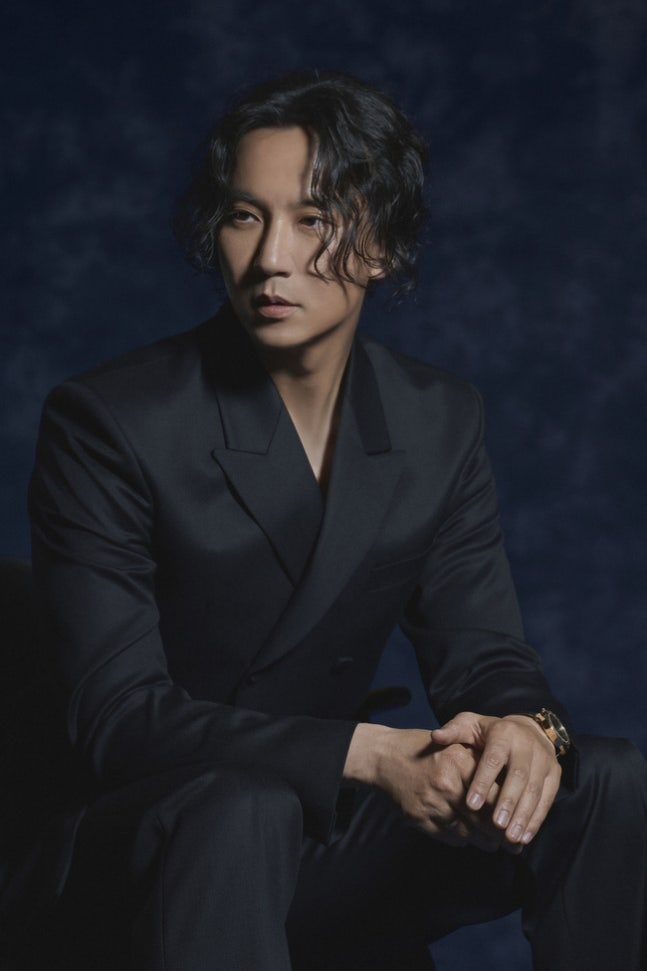
Apart from acting, Kim also runs a non-profit organization, Gil Story, which strives to preserve cultural heritage, promote arts, and raise relief funds, which, in a way, makes him a model of righteousness.
"Not at all. I think righteousness comes more from the person's circumstances than from his values. The same everyday action can look righteous in certain circumstances. Even when I play a good character, I don't try to portray them as simply nice. I approach it by considering their multidimensional nature. In that sense, I don't run a civic group because I'm a righteous or kind person. I just believe that anyone working in popular culture and the arts has a duty to give love back to the public in some way. That belief is what led me to pay closer attention to the little things around me. Lately, I've been focusing on supporting young people preparing to live independently."
Regarding being given the title of "Action Master," Kim said, "Action is all nice for me," but admitted, "Unlike before, I've started to feel a lot more fear. Back then, I would just throw myself into it without thinking or knowing much, but now I find myself wondering if I can really pull it off. The texture of action has changed compared to when I was young. It's shifted into action that incorporates experience and know-how. I also see action as a part of acting. The emotions of the character should flow through, and the lines and movements need to look beautiful. That's what I strive for. There are many actors who are better at action than I am. Each actor has his unique style. I think people call me that because I've shown it often."
Recently, Kim Nam Gil has mostly taken on righteous hero roles in dramas such as Song of the Bandits and The Fiery Priest. Does he have a penchant for heroic roles? "It wasn't intentional. Rather than it being for the grand sake of justice, it's more as representing the basic values people try to uphold in life. I can also be cowardly or hide in certain situations. But I have a tendency to represent the weak through my work. Approaching characters from that perspective naturally expands into those kinds of roles. So unintentionally, I've ended up playing a lot of righteous characters. But if I were to play a villain, that might change. It's just that taking on these roles ended up creating that image of me."